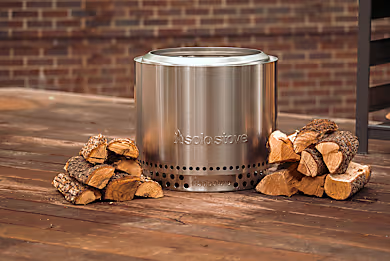
We all love the crackling of a fire — but what actually makes it pop, burn clean, and last long enough to matter is the wood underneath it. Some firewood burns hot and steady for hours; some burns fast and smoky; some shouldn't go anywhere near a fire pit. Here's the full breakdown, plus how to pick the right wood for your region and the right wood size for your specific Solo Stove.
Quick answer: What's the best wood for a fire pit? Kiln-dried or well-seasoned hardwood — oak and hickory are the gold standard. They're dense, burn hot, last long, and produce minimal smoke. Softwoods like cedar, Douglas fir, and juniper are fine alternatives if they're properly dried, but they burn faster and cooler.
In this guide:
- Hardwoods
- Softwoods
- Best Firewood by Region
- Match Your Wood Size to Your Fire Pit
- What Not to Burn
- FAQ
1. Hardwoods
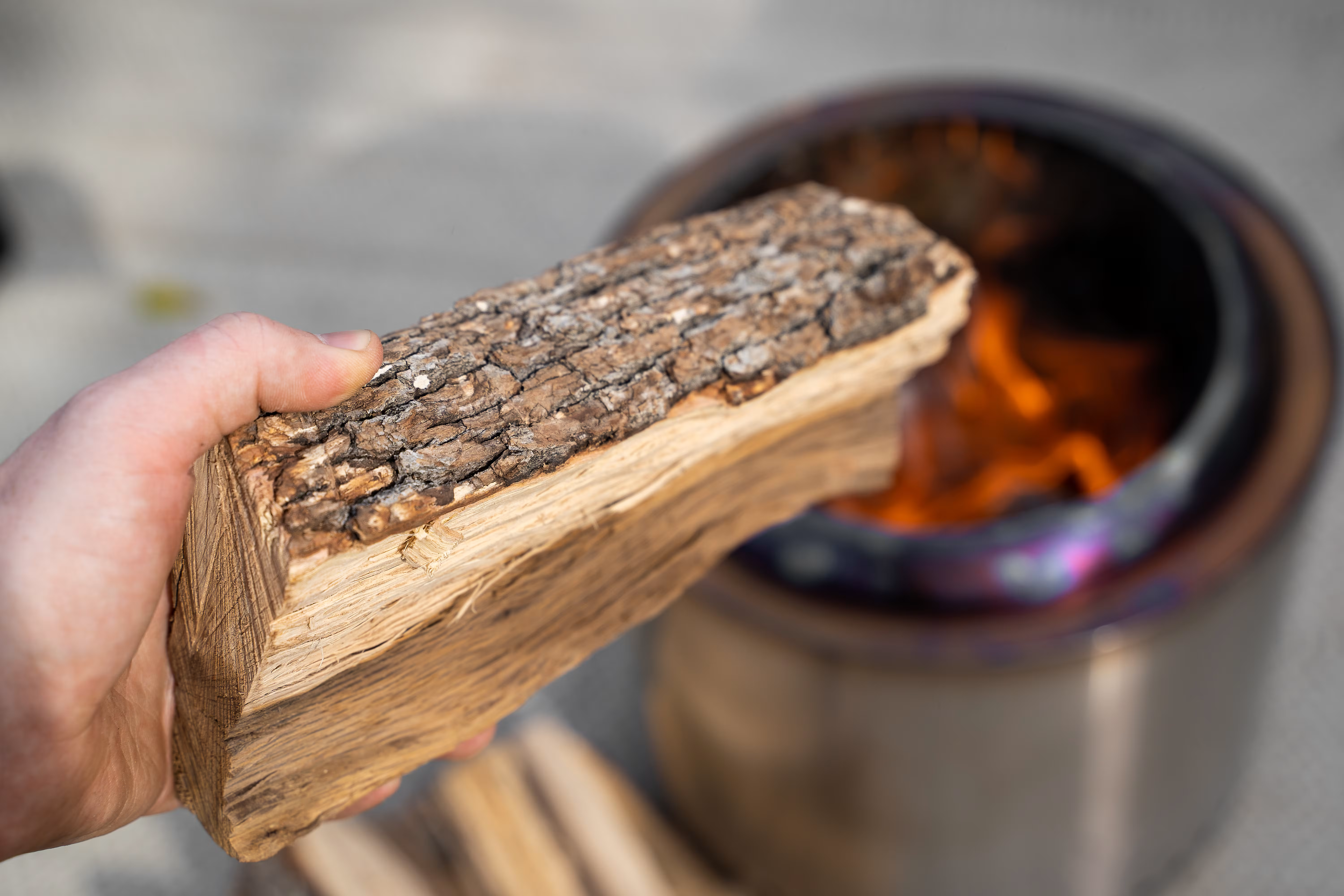
As long as you're using kiln-dried or properly seasoned hardwood, you'll get a hot, roaring fire. Hardwoods are naturally denser than softwoods, which means more internal surface area to burn through — and longer burn times as a result.
Oak - About as dense as firewood gets. Oak is exactly what you want for long burns without constantly feeding the flame.
Hickory - The champion of the firewood world: high heat, long-lasting, and a clean burn that shouldn't cause smoke issues in a Solo Stove.
Pecan and Maple - Both burn similarly to oak — dense, long-lasting, and clean — and are common alternatives depending on what's locally available (see the regional breakdown below).
Compressed Wood - A fire fanatic's best-kept secret. Made from recycled sawdust, wood chips, and shavings, compressed wood lights easily, produces very little smoke, and is generally safe to cook over.
2. Softwoods
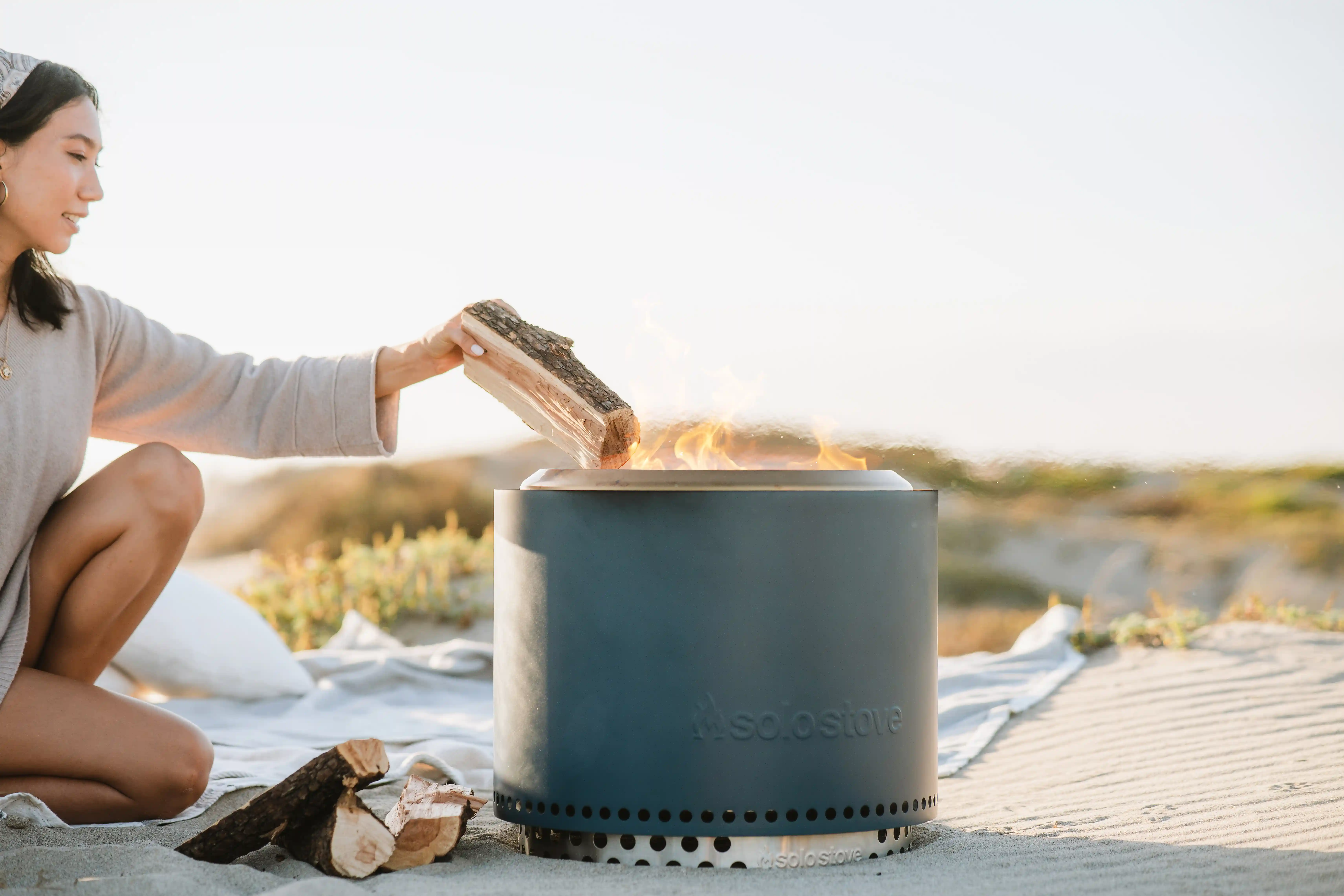
Softwood isn't the typical choice for a fire pit, but it has its place. It contains more sap than hardwood, which is why it smells sweeter when burned, but it also burns cooler and faster since it's less dense. If you want an affordable option for a shorter fire pit session — or you live somewhere softwood is what's actually available — it can work well.
Solo Stove Juniper - Sweet-smelling and kiln-dried, meaning plenty of pops, low smoke, and a consistent aroma throughout the burn.
Douglas Fir - Not part of the true fir family, but widely available and a user-friendly alternative to hardwood. Stick to kiln-dried Douglas fir specifically — less sap means less risk of mold.
Cedar - Naturally anti-fungal, which makes it good for long-term storage, and easy to split for kindling. Its smoky aroma also pairs well with the Fire Pit Cooking System.
Poplar - A good choice for getting a fire started or a short session by the fire pit. Plan to add hardwood afterward if you want the flame to last.
3. Best Firewood by Region
The "best" wood is often just whatever quality hardwood is actually available near you — sourcing local, seasoned wood is usually cheaper and more sustainable than shipping logs across the country. Here's what tends to be most available by region:
- Northeast:
- Oak, maple, ash, birch
- Notes: Maple and ash are excellent hardwood alternatives to oak; birch lights fast but burns quicker.
- Southeast:
- Oak, hickory, pecan
- Notes: Some of the best hardwood availability in the country; hickory in particular is a Southeast staple.
- Midwest:
Oak, hickory, ash, maple
- Notes: Similar hardwood profile to the Southeast and Northeast; ash was historically abundant before emerald ash borer impacts in some areas.
- Mountain West:
Aspen, Douglas fir, pine
- Notes: Aspen and pine are softer and burn faster - good for kindling or shorter sessions; Douglas fir is a solid middle-ground option.
- Pacific Northwest:
Douglas fir, cedar, alder
- Notes: Softwood-heavy region; alder is a good clean-burning option, and Douglas fir is the regional workhorse.
- Southwest:
Mesquite, juniper, piñon pine
- Notes: Mesquite burns very hot and is popular for cooking; juniper is widely available and aromatic.
No matter where you are, the rule stays the same: kiln-dried or seasoned wood (moisture evaporated out) will always outperform wet or green wood from the same species — less smoke, easier to light, easier cleanup afterward.
4. Match Your Wood Size to Your Fire Pit
Wood size matters as much as wood type — a log that's too long or too thick for your fire pit's burn chamber won't sit correctly under the vent holes, which can choke the airflow that makes a Solo Stove smokeless in the first place.
If you'd rather skip firewood sizing altogether, most models can also run on wood pellets with a Pellet Adapter.
5. What Not to Burn in Your Fire Pit
Accelerants — Lighter fluid and similar accelerants can tarnish the stainless steel. Use a proper fire starter instead.
Chemically treated wood — This includes wooden pallets, painted or stained wood, driftwood, and any construction-site scraps. These treatments release chemicals that become noxious fumes when burned — steer clear entirely.
Particleboard — The glues holding particleboard together can seriously damage your lungs when inhaled. If you've got extra particleboard lying around, it belongs in the trash, not the fire pit.
Wet or green wood — Not dangerous, but it will smoke heavily and burn poorly. If a log hisses or won't catch, it likely hasn't been properly seasoned or kiln-dried.
Ready to Light It Up?
Once you've got the right wood, check out our guide to starting a fire in your Solo Stove → for the fastest, cleanest way to get it lit.
Frequently Asked Questions
What is the best wood for a fire pit? Kiln-dried or well-seasoned hardwood — oak and hickory are the top choices for a hot, long-lasting, low-smoke burn.
Can I burn pine in my fire pit? Pine and other resinous softwoods can be burned, but they produce more smoke and pop more than hardwood due to higher sap content. If it's kiln-dried and what's locally available, it can work for shorter sessions.
How much wood do I need for a Solo Stove fire? It depends on the size of your fire pit and how long you plan to burn, but starting with 4–6 pieces and adding 2 at a time as the fire burns down works well across most models.
What size logs fit a Solo Stove? Standard 10"–12" logs fit any full-size Solo Stove fire pit (Ranger through Canyon). The Mesa and Mesa XL tabletop pits need smaller, roughly 5" pieces like Mini Oak Firewood.
Can I use wood from my own backyard? Yes, as long as it's a safe hardwood or softwood species (not chemically treated or from construction scraps) and it's been properly seasoned — meaning dried for at least 6 months to a year to reduce moisture content.
Is kiln-dried wood necessary? It's not strictly necessary, but it makes a real difference — kiln-dried wood has lower moisture content, which means less smoke, easier lighting, and less creosote-style residue buildup.